Is that the question? Way back 50 years ago when I was 12 I was the editor of the Jobette, a publication for MN Bethel #19 of the International order of Job’s Daughters. Every 3rd week I would handwrite/draw on Ditto (machine) Masters the news and filler for that month’s issue. I didn’t know how to type yet. I went down to the Masonic Temple at Lowry & Central early and ran the issues while the other girls set up for the meeting. The ditto machine produced wet lavender blue reproductions of the masters then I collated and stapled the corner. The Ditto machine seemed almost magic. The first machine operated by turning the crank to make the drum turn and the solution to get the ink from the master onto the page. Seems we upgraded during my tenure to an electric model that literally spit out the pages at lightening speed.Thus began my first foray into the publishing world. I loved every aspect of it from writing the pages to stapling.
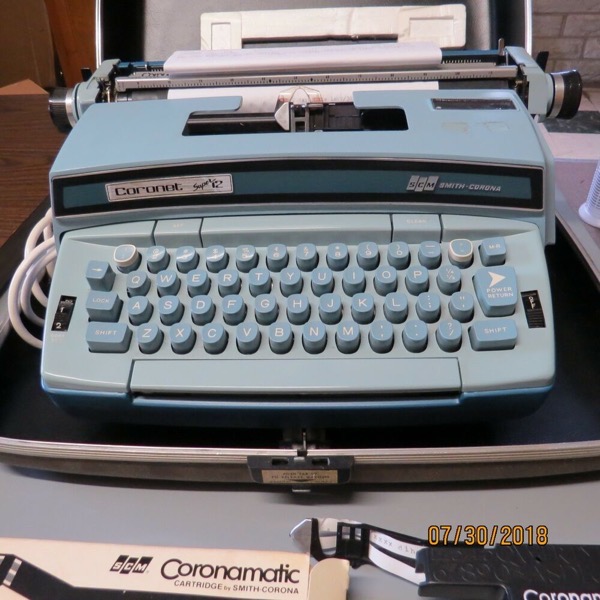 In Junior High we had a monthly newspaper. I wrote news and feature stories. I think the teachers handled the layout and publishing; but, I really enjoyed writing. This is shortly before I was told that I lacked good journalistic style and should probably stick to some other kind of writing. Teachers have no idea how they can steal the joy of a student in a few words. It was also around this time that the counselor told me I wouldn’t be a good candidate to work in natural resources since I didn’t have adequate math skills. They just refused to entertain the thought. Looking back, I wish they had been more supportive. Was there no way for me to gain those math skills? I was surely motivated. I was a bt lost without any real direction to go for a career. I knew I didn’t want to be a nurse; and though my parents wished it very hard, I really did not want to be a secretary. Journalism was interesting then. Remember, this is before Watergate. Doing human interest stories was my jam.
By high School I was back into working on the paper. I started by writing feature articles and they recruited me to sell advertising. Believe me, I’m no salesperson! I suck at selling anything especially advertising. I did enjoy doing ad layout though especially when it wasn’t ROTC where they required a certain ad was placed.
Ah layout! So this was the 1970’s We didn’t have computers and we were just starting to use Xerox copiers. In fact, most smaller runs were still being done on Ditto machines and Mimeographs. Our High School was fortunate enough to have a program to train press operators. We had a full off-set press set up. So layout was manual right down to the rubber cement & t-squares. I can still smell rubber cement (probably a little hallucinogenic?) Ad copy was a collage of clip art (literal clip art for large books of black on white graphics we clipped out with scissors), rub on lettering, graphic/line tape, and a bit of type from the IBM Justifyer.
The Justifier predated any word-processing software or graphic layout. It was basically and IBM Selectric typewriter using their ball type system; but it had an added feature that was pure too doo. You type in the text, take a reading from the scales and dials as to to hyphenate and if it looked right you hit the button and the Justifier magically resized the spaces in the text so both margins were straight. The Justifyer typed it out on a sticky backed paper that was cut and placed on the page pattern to make the master for photographing and making into a plate. Now, as magic as the Justifier was, it didn’t allow for mistakes. If you had a typo in your text well you basically started the paragraph completely over from scratch. Amazing how quickly one learns to slow down and type with accuracy. I loved the Justifier. Typing was much like playing the piano and it was creating something. I also was able to edit on the fly and read everything in the paper. It wasn’t long before I secured my job as the only person to use the Justifier.
 The Journalism department soon became my family and home away from home. I spent every spare minute there; ate my lunch over a nest of t-squares, graphic tapes, paper scraps, and layout pages. The smell of rubber cement and emulsion paper followed me everywhere. The paper’s advisor soon decided I needed to learn all aspects of Journalism. I learned proper page layout, photo editing (remember no Photoshop this was all done in the darkroom), headline writing (including rubbing the transfer letters onto the layout minding the picas), and content editing. We did an issue once a month. Hours of work went into it before it was sent to the printers. We approved the proofs and then once printed we collated and folded each issue. Folding was something I usually avoided. The fresh ink or the paper made me feel ill. Our paper, The Sandpiper, was award winning and we were very proud of it. There was no doubt in my mind in 1977 that I was going to pursue a career in Journalism. I even signed up for the best Journalism school in the state, St. Cloud State University.
I spent a year at Anoka-Ramsey Community College getting the basic core classes dispatched. It was a really great year and I met many interesting people including Garrison Keillor, Michael Dennis Brown the poet, and Robert Sullivan the Philosophy professor who really changed my life. The second year, I went to St. Cloud and indeed studied Journalism. But, it was post Watergate and Journalism had changed. It was now cut-throat competitive. I enjoyed the photography classes; but, the required Journalism 102 class was a no go. I was working at B. Dalton Bookseller and living off-campus. No car so I walked 13 blocks to and from school along the Mississippi River. I lived a 211 N 11 Ave so it was across downtown. Still stands as the coldest winter on record for St. Cloud.
First day of that required class I squeezed into the little desk and settled in for the usual syllabus and orientation talk. I think it was the 10th time the professor repeated something about how this was the most important thing in our lives and how he required full compliance that I thought, “Did I enroll or enlist?” After class I went to the registrar and dropped the class. Yes, I know this ends my Journalism major. Only one professor taught that class. I just didn’t want Journalism bad enough. But, now, I’m at a lost for what to do next. I threw my efforts behind the book store job. 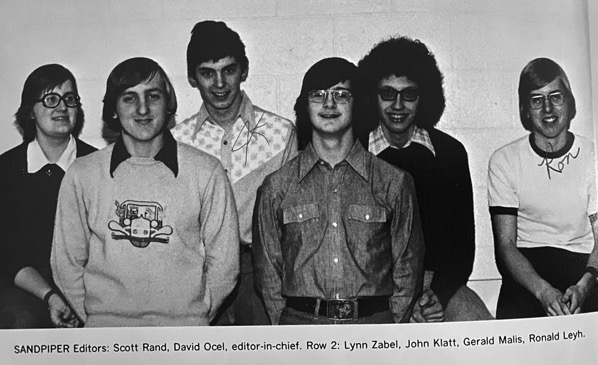
I continued to write; mostly poetry and personal letters. And, I made some extra money on the side typing thesis for people. I learned proper form for a variety of scientific, literary, and technical papers.I actually enjoyed that process.
In March of 1979 I moved to North Carolina and pretty much figured my Journalism days were far behind me. I still journaled and wrote letters. Seems odd to think of a time we didn’t have free long distance, texting, email, or FaceTime. Still no direction career wise so I took a year off school; now they call it a gap year. Then I resumed taking only classes that called to me. Ironically ended up with a Major in English from Elon University. We were still typing our research papers out on typewriters with erasable paper when allowed and using a card catalog in the library to find the reference materials. I avidly read magazines and newspapers when I could get them. Still made some money on the side tutoring and typing. When I graduated, I worked for the American Association of University Women on their technical research projects because I knew the science and how to organize the data.
In 1985 I moved to Alaska and became a part of the Waldorf Education Movement there while working ats a clerk specialist at the University of Alaska, Anchorage. Guess what! They needed a newsletter. Out came the typewriter and Lynn was at it again. This time I could do layout and all directly on copy paper and then take it to Kinko’s where they reproduced it on the laser copy machines (we called them Xerox machines though by that time most weren’t Xerox they were Cannon or Epson or I BM.) I upgraded to a word processor that wasn’t really much of a computer but it was better than typing. Eventually someone gave me an old Kaypro II with Wordstar loaded. I moved from the newsletter to making calendars & books. The old printing bug was back. There’s just something magical about it.
I landed in the dog world in 1992 or there about. As a trainer, I wrote, edited, and printed all my own materials. The Cook Inlet Kennel Club and the Sheltland Sheepdog Club had their own newsletters too. Conveniently, I edited them for several years. Meanwhile, the Kaypro II faded into disuse when someone gave me an HP personal computer and I started doing all my work on it. It’s amazing how much easier it is with a computer. I was struggling to learn my way around Microsoft Word and Publisher when my friend in Texas, Deb Casey wanted some help with her websites. Oh sure – why not?!? Edward, my husband helped me learn what a hyperlink was and how to Cut, copy, paste with keystrokes. I mean really – I had no clue. It was all still creating something and typing and working with the magic. In a few short years, I upgraded the computer and learned how to make websites.
I don’t know if it’s my birth heritage or a personality trait; but, I can’t just do something a little bit and drop it. By 1998, I am running my own virtual web server/hosting and managing-designing-maintaining hundreds of websites mostly for kennels and dog related groups. I learned my way around Photoshop, Dreamweaver, Corel Paint Shop Pro, and WordPress. This was all consuming. Of course I trained dogs and homeschooled my children at the same time. You know, websites aren’t much different from the old newspaper layout. Add in navigation and color and it’s all basically the same principles of layout and design. Content management is content management. I even learned to hand code HTML, HTML5, CSS, and JavaScript.
Deb sponsored me as a member in The Australian Cattle Dog Club of America in 2002. It wasn’t long before I was Associate Editor of their print magazine The ACDQuarterly. I compiled the content and it was sent off to Cynthia who did layout for the printers. Skip ahead to now. 50 years later I and guess what – I’m the Editor and Production (layout/photo editing/content management) for the Quarterly. I use Adobe InDesign & Photoshop every single day. I make ads too. I have also produced several online publications, magazines, and newsletters. Right back making money where I started when I was 12. At no point did I choose this work; I think it chose me. I still enjoy it; but, if you were to ask me what I do for a living, I’d probably answer retired.
What’s in a career? My skills honed in the early days of writing feature stories served me well for being a dog trainer and working with children. My layout skills have rallied time and time again to help communicate complex subjects in accessible formats. Am I a Journalist? Maybe. Is it justified? Ironically, not usually anymore. Those perfect margins and two spaces after a period are long gone. Style comes and goes. Respect for the job wavers. With WIX and WordPress most people think they can do their own websites. Usually, they lose interest before the site is cohesive or they lag with keeping it updated. Blogging once popular has faded to the more easily maintained social media. It is no longer a “build it and they will come” era. To succeed you need to work at it every single day. Publishing is just the beginning of the process. SEO (Search Engine Optimization) and social media hype are specialties now. I just wonder what I and my little MacBook Pro are going to do in the future.



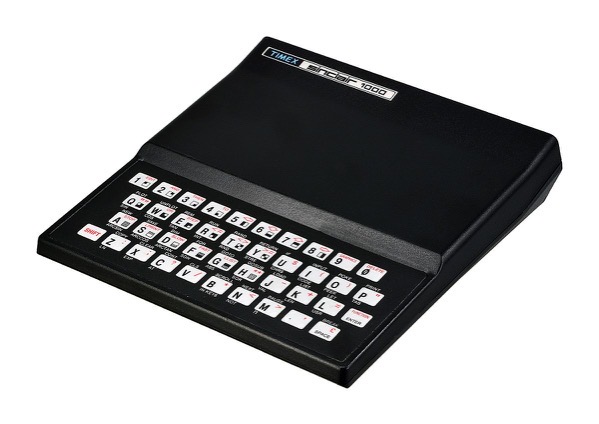 This is a Timex Sinclair 1000 gifted to me by my sister-in-law Mary Ellen. In 1983-1985 I spent way too much time hand coding in games from dime store magazines into this computer. It was my first venture with coding and precision. I often spent whole days at it. One mistake and the game didn’t work. No we didn’t have the internet to look up bugs or to streamline or simplify the process. No cut/copy/paste. Just good old hand entry of code. I would frequently not eat or be late to pick up my husband at work. No cell phones either. Just a step beyond punch cards. This was a personal computer in those days.
 The Kaypro was replaced by WebTV and I quickly learned to do email, lists, some social media, and build websites on WebTV and Yahoo. Oh my! This was the rabbit hole. I spent nearly all my time in front of the TV clacking away on the keyboard. After a few years of WebTV my sister-in-law obtained an iMAC. I never used it but my daughter Jean became a real iMAC jockey. I received a few more used computers. Now these were full Windows PCs and I replaced Wordstar and WordPerfect with WORD. I learned to hyperlink and quickly found my way around social media. I began updating then designing and eventually hosting and building websites. By 2004 I had some 200 websites with my name Lazytea on them.
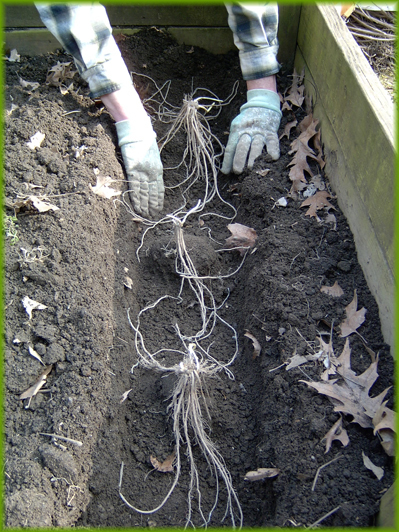
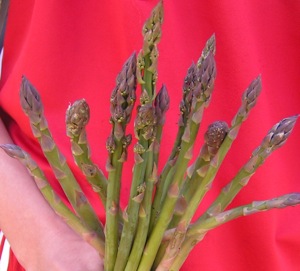
  Asparagus was quite a treat for us growing up in Minnesota. When I was very young it became my favorite green thing to eat. While the big squares of golden butter melted over the tender stalks, my grandma would tell me the story of going way out in the country to Ogden meadows where they would visit the “china men” and buy asparagus fresh from the field. This was during WWII when she worked at the Kaiser shipyards in Portland, Oregon. Asparagus was exotic. My father was a meat and potatoes kinda guy; but, he loved asparagus and decided to try his hand at growing it.


 Lazytea Times